What Is a Dropped Domain?
A dropped domain is a domain name the registry deleted and released back to the public pool after its registration expired and the grace, redemption, and pending-delete periods passed without the owner reclaiming it. Once a name drops, anyone can register it again, first come, first served. The terms “dropped” and “deleted” are used interchangeably.
More About Dropped Domains
Domain investors watch dropped domains because a name with history can be worth more than a brand-new registration: it may carry an existing backlink profile, type-in traffic from people who remember it, and a word combination someone else thought of first. Some buy dropped names to flip for profit; others just want the right name for a new project. Either way, knowing how the drop works tells you when to act and what to check first.
The drop timeline
For generic TLDs like .com, a name typically drops 35 to 80 days after its expiration date. It passes through 3 stages first:
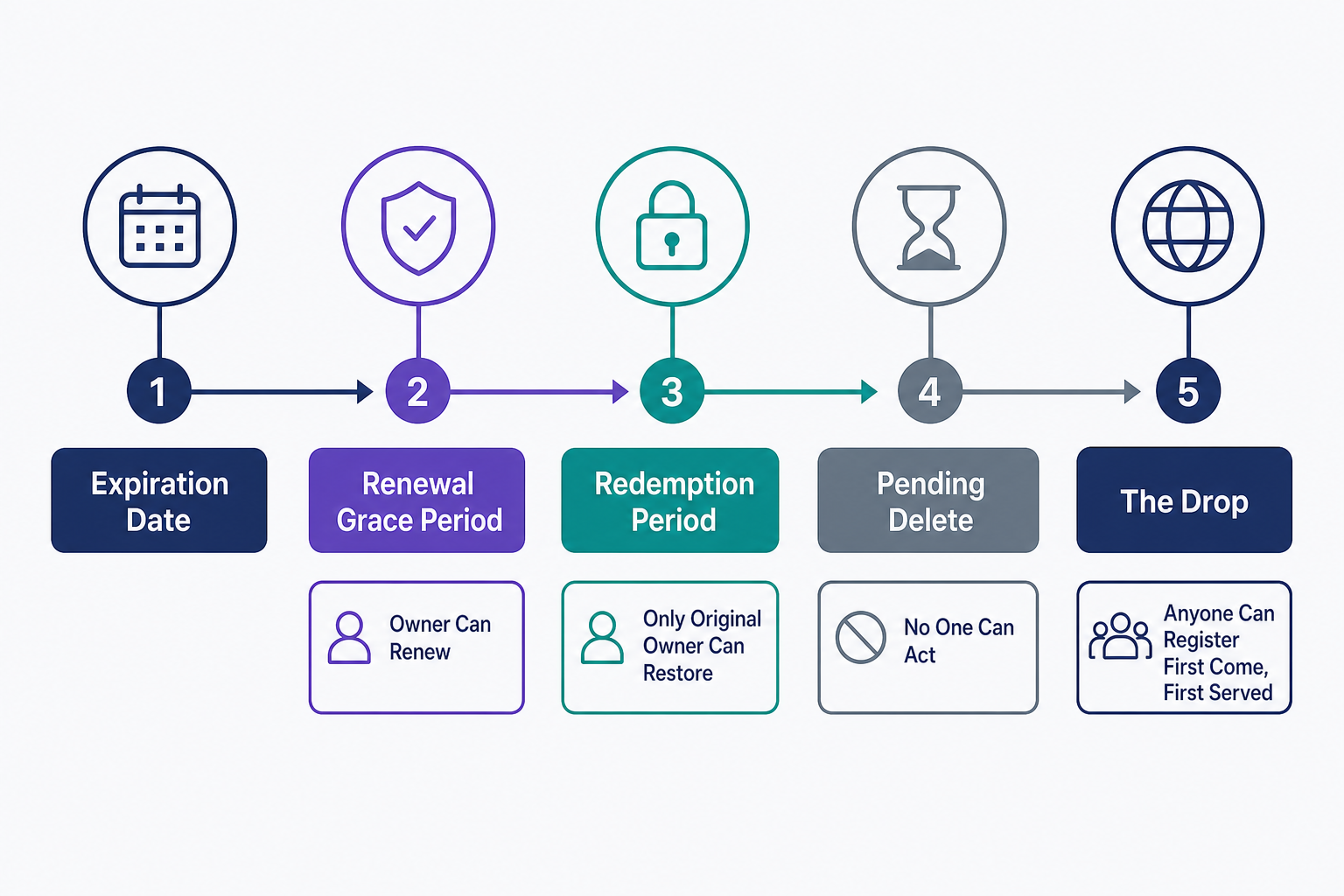
- Renewal grace period (0 to 45 days, set by the registrar): most registrars let the owner renew at the standard price, commonly for around 30 days, though a few offer none.
- Redemption period (30 days): only the original owner can restore the name, for a restore fee that often runs $80 to $150 on top of the renewal.
- Pending delete (about 5 days): nobody can renew, restore, or register the name.
Then comes the drop: the registry deletes the name and releases it back to the public pool, where anyone can register it, first come, first served. Some registrars send expiring names to third-party auctions during the grace window, while the owner can still reclaim them; that's a registrar business practice, not a stage of the lifecycle. DreamHost doesn't auction expired domains: we hold them through a 30-day grace period, then the 30-day redemption period. Country-code TLDs like .de or .io set their own schedules, so check the registry's rules before you count the days.
Dropped vs. expired vs. deleted domains
The 3 terms mark different points in the same process:
- Expired domain: the renewal date has passed, but the original owner can still get the name back during the grace and redemption periods.
- Dropped or deleted domain: the registry has released the name, the old owner has no special claim, and anyone can register it. The 2 terms mean the same thing.
- The drop: the release moment itself, when the name leaves the registry database and becomes available again.
That's the line to check before you spend money: before the drop, the old owner holds the cards; after it, the name goes to whoever registers it first.
How to catch a dropped domain
Start with a WHOIS lookup to see where a name sits. A status of “autoRenewPeriod” or a registrar hold usually means it's still in the renewal grace window. “redemptionPeriod” means the grace period has ended, only the original owner can restore it, and the drop is at most about 35 days away. “pendingDelete” means the name drops in about 5 days. ICANN's EPP status code reference explains each code you might see.
Don't count on hand-registering a good name the moment it becomes available: automated drop-catching services claim valuable names within seconds of release. Place a backorder instead, and use a drop list, a daily feed of names scheduled for deletion, to find candidates worth chasing. If someone beats you to a name, it usually resurfaces for sale on the domain aftermarket at the new owner's price.
What a dropped domain is worth
A dropped domain's appeal is its history: a backlink profile you can inspect and a name people may still type into a browser. Treat that as something to verify, not authority you inherit. Links pointing at the old site may be ignored once the domain's ownership, purpose, or content changes, and Domain Authority (DA) is Moz's comparison score, not a Google ranking factor, so a high pre-drop DA guarantees nothing.
Two risks belong on your checklist. Since March 2024, Google's spam policies have treated “expired domain abuse,” repurposing a dropped name mainly to boost low-value content, as spam that can push a site down in results or out of them entirely. And a trademarked name keeps its legal protection after it drops, so registering one invites a dispute. Audit the backlinks and the name's past use before you pay, and buy because the name fits your project, not as a ranking shortcut.
Frequently Asked Questions
- It depends on how you get it. Hand-register an uncontested name after the drop and you pay the standard registration price. A backorder adds a flat service fee, usually charged only if the catch succeeds. If several people backorder the same name, it goes to auction between them.
- Once a name drops, you have no special claim. Re-register it immediately if it's still available, or buy it from whoever caught it. If it hasn't dropped yet, renew during the grace period or restore during redemption; a backorder is your safety net.
- Not reliably. The links stay published, but their value depends on relevance: links earned by content similar to what you'll rebuild tend to hold, while links to an unrelated old brand get discounted. Audit the profile with a backlink tool before bidding.
- Look up its past content on the Internet Archive's Wayback Machine, check spam blocklists such as Spamhaus, and search a trademark database like the USPTO's. Ten minutes of checking beats inheriting a penalty or a legal dispute.
Domain Registration
Search for the perfect domain name and register yours before someone else does! Click below to check availability and see special offers.
Domain Names