What Is a Domain Grace Period?
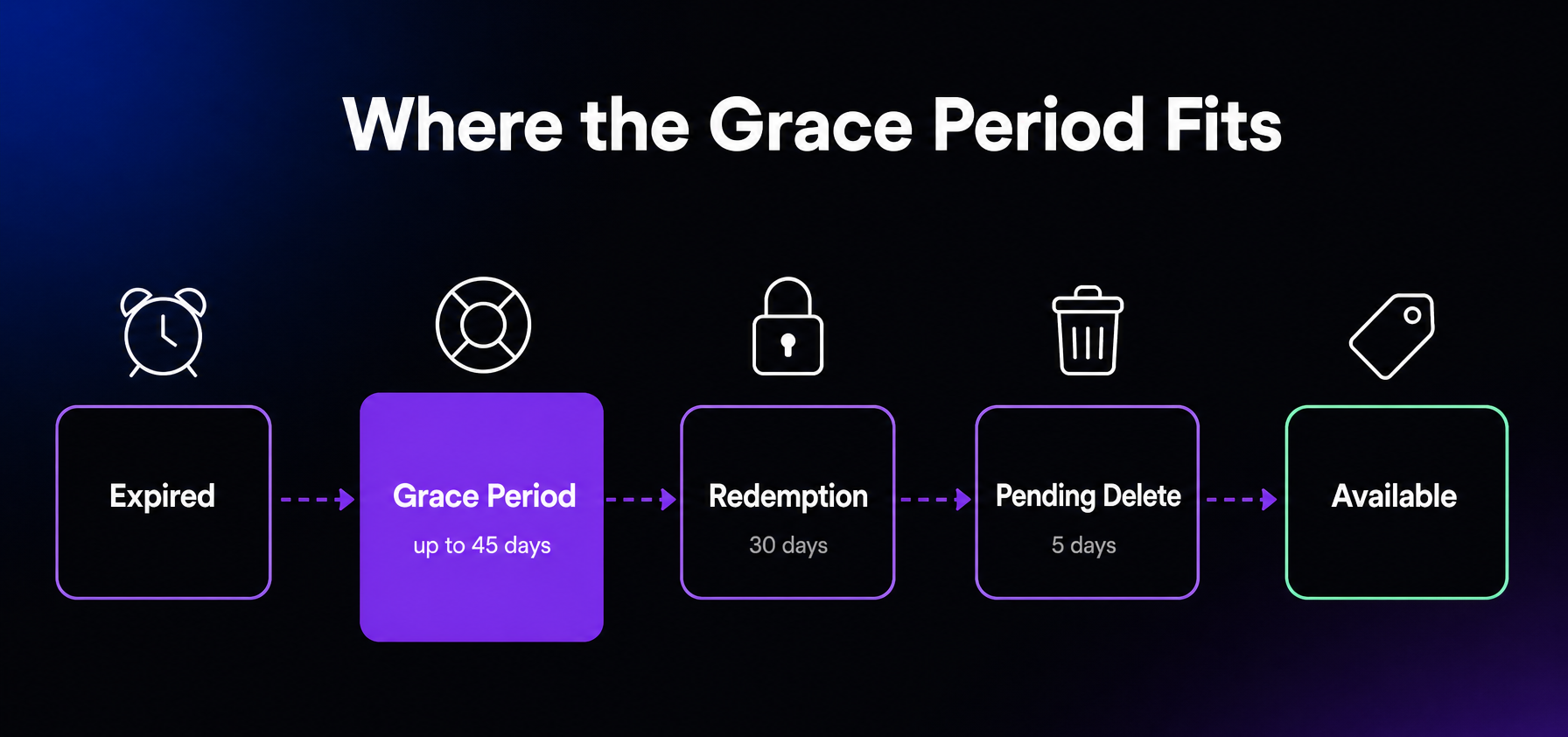
A domain grace period is the window after a domain expires when the original owner can still renew it, usually at the standard renewal price. Registrars set the length — commonly around 30 days, up to 45 — though some offer none. It comes before the redemption period, a separate stage where recovery costs an extra fee.
More About Domain Grace Periods
Registrars must send you renewal reminders as your domain’s expiration date approaches: ICANN requires one about a month before and another about a week before expiration, plus a third within 5 days after if the domain still hasn’t been renewed. If the date passes without a renewal, most registrars park your expired domain within the first few days, so your website and email go offline, and ICANN requires the DNS to stay interrupted for at least the final 8 days the domain remains renewable. That interruption is deliberate. It’s how owners who missed the emails find out. These rules apply to generic TLDs like .com. Country-code TLDs set their own expiration and recovery rules.
How long does a domain grace period last?
Up to 45 days, but the exact length depends on your registrar. Some give the full 45, many give around 30 — DreamHost, for example, holds expired domains for a 30-day grace period — and a few effectively offer none. During this window you can usually renew at your registrar’s regular rate, though some charge a late-renewal fee, and some list expiring names for auction while the original owner can still reclaim them. Check your registrar’s policy before you need it, or turn on auto-renew and never enter the grace period in the first place.
Grace period vs. redemption period
The grace period and the redemption period are different stages with different costs. The grace period comes first: renewing is routine and usually costs the normal renewal price. If it runs out, the domain enters the 30-day redemption period, where getting it back means paying a redemption fee on top of the renewal, often $80 to $150 depending on the registrar (a few charge less). After redemption comes about 5 days of pending delete, and then the name is released for anyone to register.
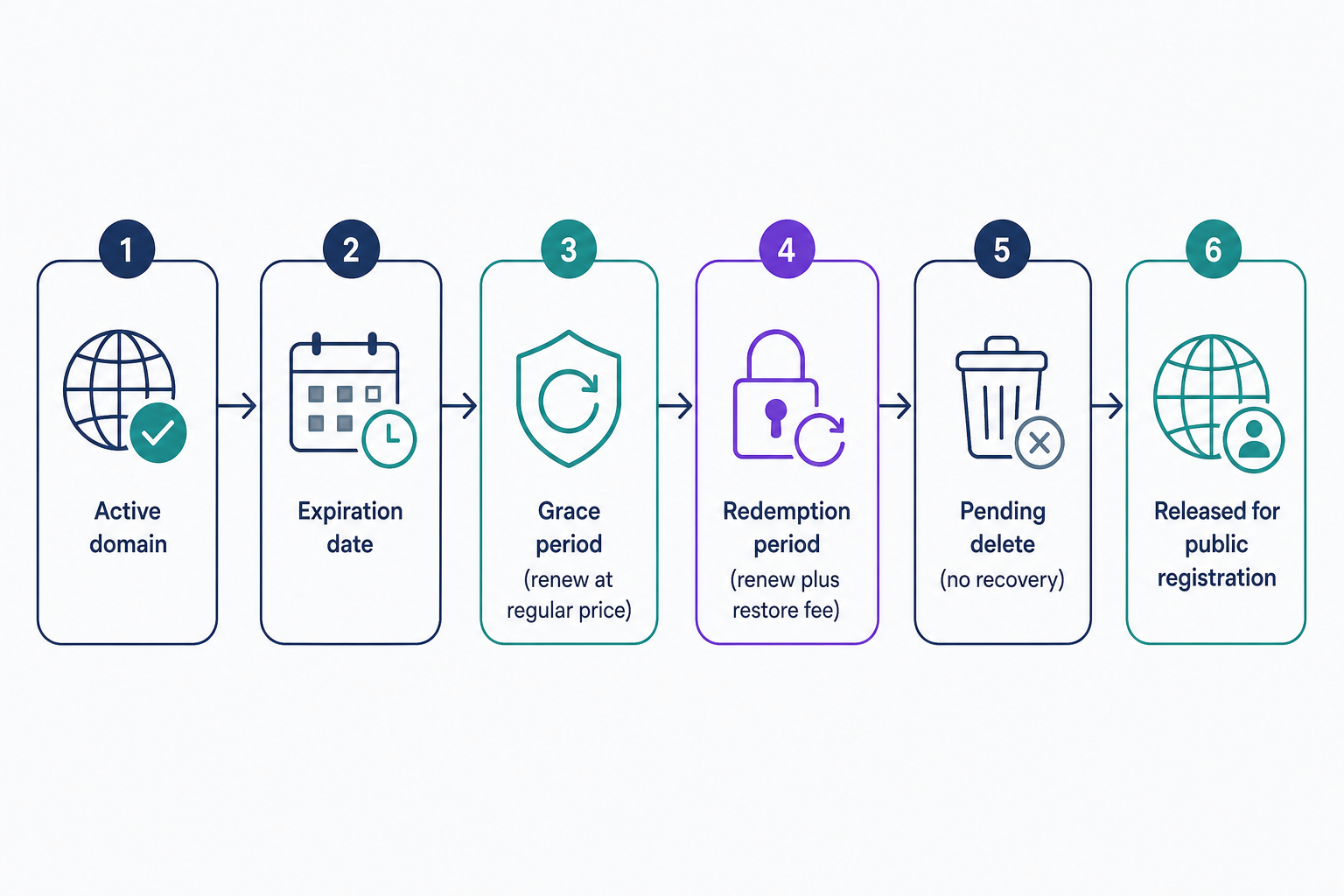
To check which stage a domain is in, run a WHOIS lookup (ICANN Lookup is free) and read the status codes: autoRenewPeriod or a registrar hold like clientHold means the name is usually still renewable, redemptionPeriod means the restore fee applies, and pendingDelete means it’s roughly 5 days from release. Treat your registrar’s panel as the final word, though: registrar grace periods are often shorter than the registry status suggests.
Other grace periods in the domain lifecycle
The renewal grace period is the one that matters to most owners, but registries define others. The add grace period covers the first 5 days after a new registration, when a registrar can cancel it for a credit — some registrars pass this on if you fix a typo in a name you just bought. Explicit renewals and transfers get similar 5-day windows where the operation can be undone. And the registry-level auto-renew grace period, up to 45 days, is what powers the post-expiration renewal window described above.
Frequently Asked Questions
- No. ICANN policy leaves the window to registrars, capped by the registry’s 45-day auto-renew grace period, and a few delete names quickly. Don’t assume you’ll get the maximum — read your registrar’s expiration policy before the renewal date.
- Yes, and it’s the cheapest way to get an expired domain back. Most registrars charge their regular renewal rate during this window, though some add a late fee. Waiting longer moves the domain into redemption, where costs jump.
- Usually, yes. ICANN bars registrars from denying a transfer just because a domain expired, though unpaid registration fees are a valid reason to refuse. In practice, many registrars make you renew before releasing an expired name, and a domain in redemption must be restored first. Safest route: renew, then transfer.
- Turn on auto-renew and keep your card current — an outdated card is a common cause of accidental expiration. Registrars must send at least two renewal notices before expiration, about a month and a week out, plus another within 5 days after if you don’t renew, so watch your inbox.
- Usually not. Expect your site and email to go down within days of expiration and stay down until you renew. Restoration isn’t instant either: after you renew, your registrar reactivates the domain, and DNS typically takes 24 to 48 hours to propagate before everything comes back.
Domain Registration
Search for the perfect domain name and register yours before someone else does! Click below to check availability and see special offers.
Domain Names