What Is Position in SEO?
Position in SEO is the rank an unpaid result holds for a specific search query. Position 1 is the highest reported rank, but it doesn’t always mean the link is the first thing searchers see. Google Search Console reports average position across impressions, so track query-level trends instead of relying on one manual search.
More About Position in SEO
Your site's position in the SERPs largely decides how much organic traffic it earns. Every step down the page costs clicks, and the falloff is steep. First Page Sage's meta-analysis of Google click-through rates (last updated May 28, 2025) measured it:
- Position 1: 39.8% of clicks
- Position 2: 18.7%
- Position 3: 10.2%
- Position 5: 5.1%
- Position 10: 1.6%
Page 2 is close to invisible. In Backlinko's analysis of 4 million Google search results (updated April 2025), only 0.63% of searchers clicked anything on the second page. Ranking #1 is ideal, but the practical rule is simpler: gains near the top of page 1 are worth far more than gains anywhere below it. That steep curve is why click-through rate (CTR) is the metric to watch alongside position.
Position vs. ranking
In everyday SEO conversation, the two words mean the same thing, and you'll see them used interchangeably. Strictly speaking, position is the numbered spot a page occupies in a specific search result: position 3 for one query, on one day, for one searcher. Ranking is the broader process search engines use to order pages. If you want that process explained step by step, our ranking entry covers crawling, indexing, and ranking in depth.
How position is counted
Google's How Search Works documentation describes three stages. Crawling discovers pages, and indexing analyzes the eligible ones and stores them in Google's index. Ranking happens last, at search time: for each query, ranking systems order the eligible results by weighing many ranking factors, which Google groups as the query's meaning, the content's relevance and quality, the page's usability, and the searcher's context. The weight of each signal shifts with the query: freshness counts for more in a news search than in a dictionary lookup. Position is computed fresh for every search, so the same page can sit at position 2 for one query and position 40 for another.
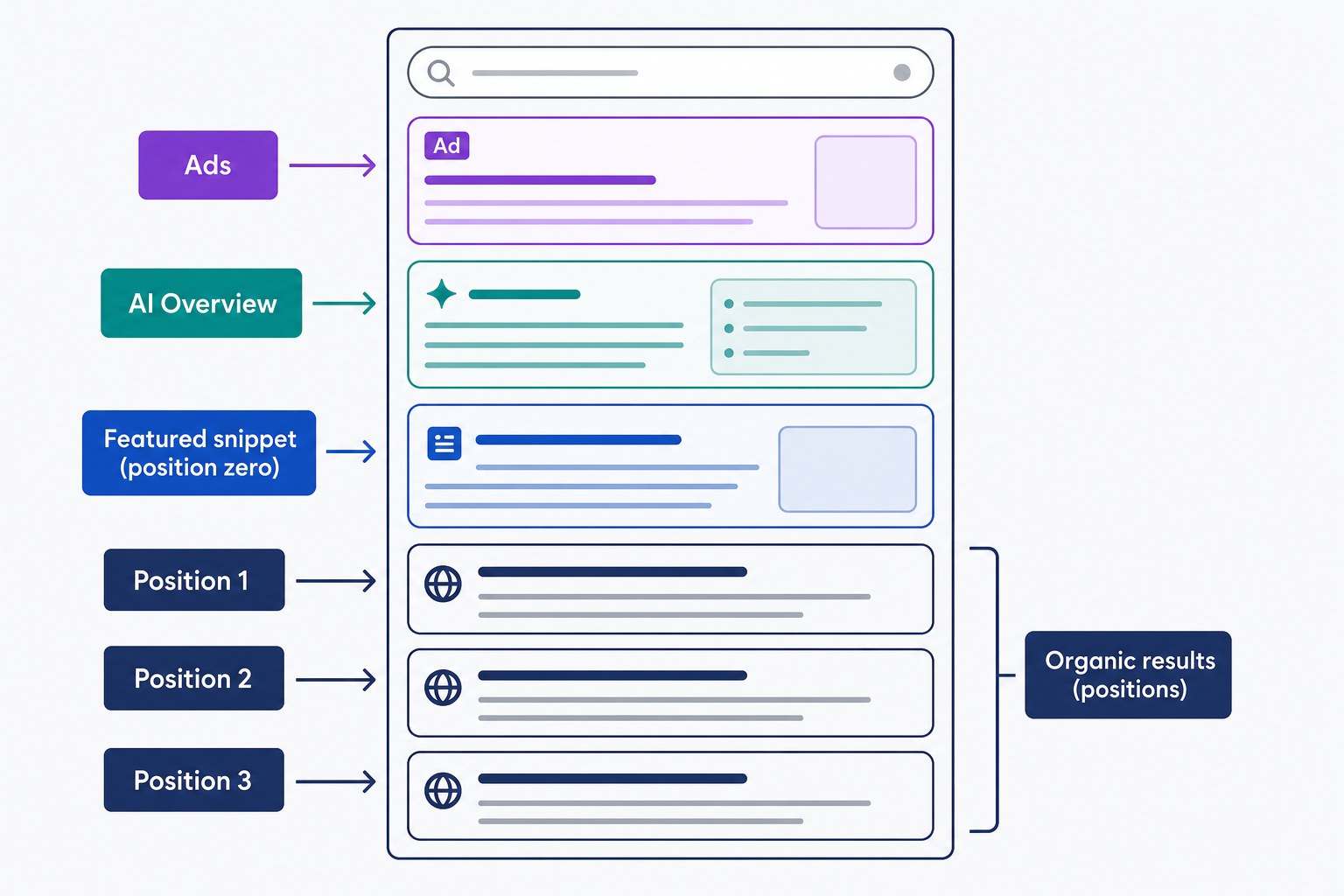
Google counts from the top: the topmost link is position 1, the next is position 2, and so on. The numbering is relative, and Google's Search Console documentation notes that its counting heuristics can change. SERP features muddy the picture, too. Ads, AI Overviews, and featured snippets all occupy space above the organic results, so the #1 organic result is often not the first thing a searcher sees. Don't count positions by eye; check what Google reports for your pages.
How to check your position
Use Google Search Console. It's free, and its Performance report lists every query your site appeared for, with clicks, impressions, and average position for each one. Our beginner's guide to Search Console walks through the setup.
Googling yourself is not a reliable check. Google tailors results to your location, device, and search history, so the position you see isn't the one most searchers get. Trust Search Console's averages rather than any single day's number.
How to improve your position
Start with queries you can realistically win. In the Performance report, look for queries with plenty of impressions and an average position between 5 and 20: real demand, within reach of page 1. Then work through the page that ranks for them:
- Study the pages that outrank you. Do they satisfy the same intent as yours, or answer a question your page skips?
- Improve the content and the title so they answer the query more completely and more directly.
- Add internal links to the page from related pages on your site, using descriptive anchor text.
- Fix any indexing or page-experience problems Search Console flags; our Core Web Vitals guide covers the performance side.
Then give it time. Rankings move on Google's schedule, not yours, so judge the query-level trend over several weeks before deciding whether a change worked.
Frequently Asked Questions
- Search Console averages the topmost position your link held across all the impressions it got in the selected period, with 1 as the topmost spot. That's why it's a decimal, like 3.5, and why it can differ from the position you see in any one live search.
- Position zero is the informal name for a featured snippet, the answer box Google displays above the regular numbered results. It's called zero because it sits above position 1. See our featured snippet entry for how to win one.
- Positions aren't fixed. They shift with algorithm updates and competitors' changes, and they vary by searcher location, device, and search history. That's why Search Console reports an average position rather than a single number. Day-to-day movement is normal; investigate only sustained drops.
Professional SEO Services
Our Pro Services team will help you rank higher and get found online. Let us take the guesswork out of growing your website traffic with SEO.
SEO Services